






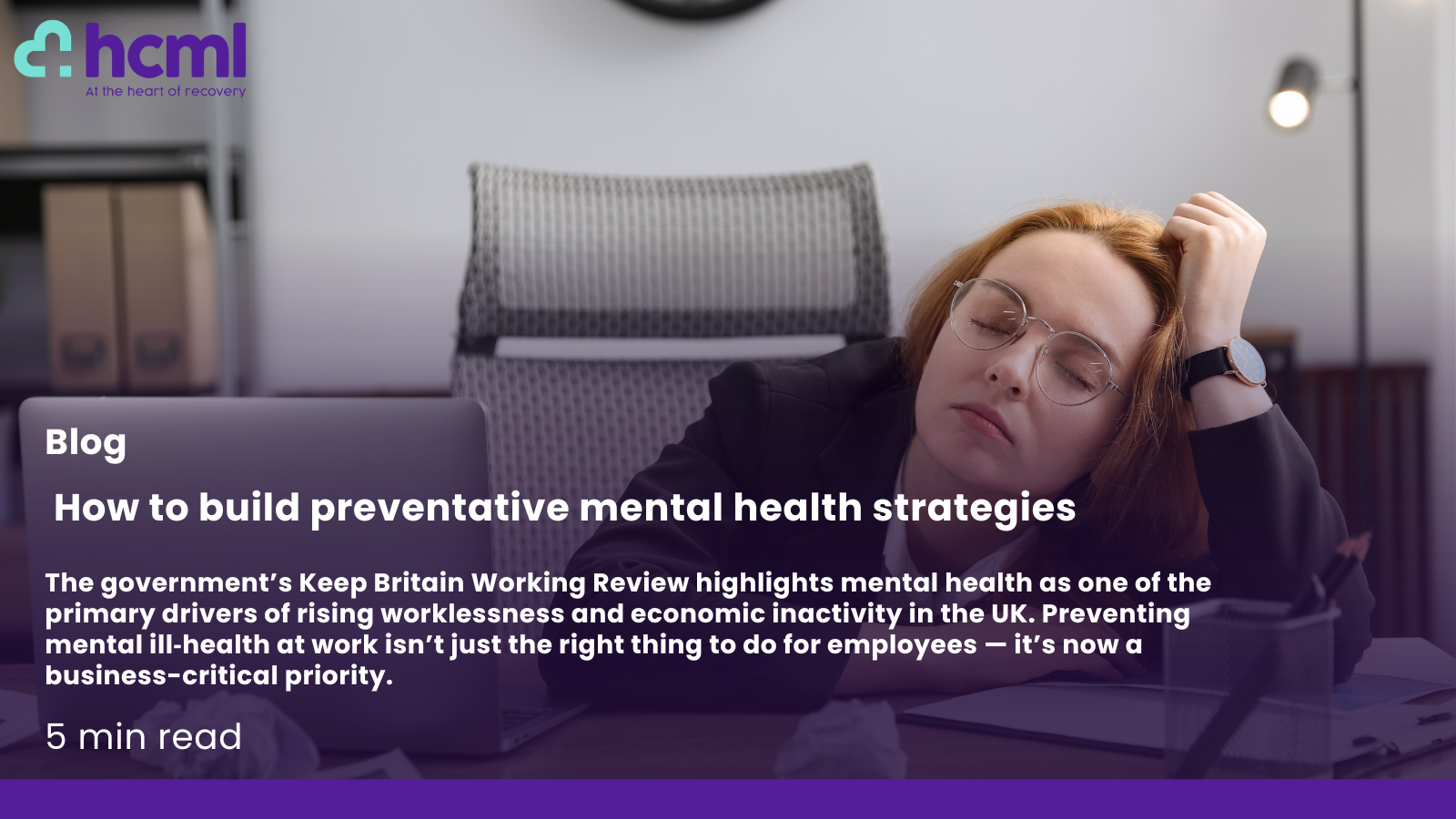
Poor mental health costs the UK economy tens of billions of pounds every year and yet the focus is often on offering employees help once they are already in crisis. With demand for psychological therapies struggling to be met by NHS services, which all too often have lengthy waiting times for support, employers are recognising the pivotal role they play in preventing issues from escalating and helping their staff to thrive.
Why prevention is better than cure
Mental ill health doesn’t just affect the individual, it can have a knock-on effect across entire teams, impacting career progression, disrupting relationships and limiting income, whilst on a personal level it can lead to long-term physical health consequences for the person involved. In order to stop issues from escalating, organisations need to ensure they have clear policies in place to support individuals sooner rather than later.
A prevention-first mindset is key
The first step is employers committing to a long-term mental health strategy, which is owned at board level, embedded deeply into the organisation’s culture, with senior leaders visibly advocating for wellbeing. Promoting positive mental health for all employees through a prevention-first strategy aims to utilise education, raise awareness and reduce stigma, which can often be barriers to people seeking support.
Focusing on the root cause
Underlying issues in role design, workload, team dynamics or organisational pressures may lead to employees suffering from stress or psychological strain. This might initially present as reduced engagement, increased absence, or conversely, working more hours than required, as well as limited career progression. It’s important for employers to tackle these risks head on by building a healthy, supportive environment that integrates mental, physical, social and financial health and removes unnecessary workplace stressors. Interventions such as psychological risk assessments, regular pulse surveys and listening groups offer vital insights into pressure points across teams, enabling employers to act accordingly.
Education, education, education
As well as making organisational changes, it’s essential to provide employees with access to resources that help them understand and take care of their mental health.
Resources such as personal wellbeing plans and apps, regular check-ins with line managers, as well as training to equip leaders with the skills to hold supportive conversations with confidence. These are all useful tools for providing preventative support to help individuals recognise early signs of stress and take action.
In addition, helping employees understand the way in which their everyday routines can also help to support their wellbeing is of vital importance. Introducing small changes including; good sleep hygiene, hobbies, limiting blue light exposure, avoiding caffeine later in the day, daily movement routines, good nutrition and hydration, as well as supportive social relationships, can all help to reduce stress and support positive mental health.
Creating a safe space to talk
Employees must feel comfortable to talk openly about their feelings without fear of judgement, reprisals or a negative impact on their career. Building a safe space to talk begins with line managers, who must be able to support their teams with kindness and confidence. Conversations should always be clear and compassionate, with listening to understand rather than respond being central to discussions that are focused around creating space for silence and reflection, offering staff options rather than solutions. A ‘see, say, signpost’ approach will help managers identify employees who are experiencing more severe difficulties and who may need guiding towards professional help.
Shaping a tiered support system
The most successful prevention-focused strategies incorporate support across three levels: organisational, individual and reactive.
Preventative measures at an organisational level serve to mitigate risk factors and create healthy working conditions, whilst offering employees resources and early intervention tools at an individual level can serve to manage challenges before escalation. Tools such as talking therapies, wellbeing advocates, clinical support, rehabilitation pathways, sickness absence management and employee assistance programmes are all solutions that can help to support employees at a reactive level.
Unfortunately, eliminating stress from the workplace entirely just isn’t possible, but what we can do is create support systems and work environments that prevent day-to-day pressures becoming long-term health problems. As employers we can take a leading role in improving wellbeing for individuals by investing in early intervention and creating workplaces where employees feel supported, valued and able to flourish.